Tired of wearing oversized shirts just to hide enlarged breasts? It’s a far more common frustration than most men realize, affecting at least 30% of men over their lifetimes and up to 65% of older men. Our gynecomastia surgery in Riyadh restores a natural masculine contour, allowing you to put fitted shirts back within reach. At Enfield Royal Clinic, our qualified surgeons treat male breast reduction using a personalized blend of Vaser liposuction and precise glandular excision. Whether your concern is tenderness, asymmetry, or the embarrassment of enlarged male breasts, we address it completely.
Procedure Time
1 - 3 Hours
Downtime
1 - 2 Weeks
Cost
SAR10,000 to SAR 25,000
Results
2 - 3 Months
Table of Contents
What is Gynecomastia Surgery?
Gynecomastia surgery, also called male breast reduction or subcutaneous mastectomy, is a body contouring procedure that gently flattens the male chest. It is not weight loss surgery. Instead, it blends liposuction with glandular tissue excision under SFDA standards. This approach works well for men dealing with persistent chest enlargement.
Best Gynecomastia Surgeon in Riyadh

Your gynecomastia procedure is performed by Dr. Muhannd Ahmed, a plastic surgeon with 15 years of experience. Certified by the Syrian Board and skilled in VASER body contouring, he approaches male breast reduction with quiet precision and a focus on natural masculine proportion. Rather than following a template, he builds your plan around your anatomy. At Enfield Royal Clinic, his patient-centered care guides you calmly from consultation through recovery.
What Conditions Does it Treat?
Beyond treating excess chest tissue, the surgery addresses the following concerns:
- True glandular tissue enlargement
- Pseudogynecomastia or fatty chest deposits
- Breast tenderness and persistent heaviness
- Chest chafing during physical activity
- Nipple discharge from glandular growth
- Noticeable chest asymmetry or unevenness
- Gynecomastia lasting beyond 12 months
- Body image distress and social withdrawal
Which Techniques are Used for Treat Gynecomastia?
Multiple techniques are used for this corrective surgery, allowing our surgeon the flexibility to address excess fat, dense glands, or loose skin. Here is a brief breakdown of each surgical approach.
Liposuction
Liposuction gently removes excess chest fat through a fine cannula. Sometimes paired with ultrasound assistance, this targeted approach works best for men who have good skin elasticity and only minimal glandular tissue.
Glandular Tissue Excision
Glandular tissue excision targets true gynecomastia through a small incision around the areola. By directly removing the dense glandular disc, this method offers permanent results because that specific tissue cannot regrow.
Combination Technique
The combination technique blends precise liposuction with direct excision to remove both fat and glands simultaneously. As the most common technique, it sculpts smooth chest transitions for men dealing with mixed tissue types.
Mastectomy with Skin Resection
Mastectomy with skin resection treats severe cases involving significant excess skin. Surgeons often reposition the nipple and apply advanced skin tightening technologies, ensuring a stable, comfortably contoured chest after substantial tissue removal.
The Key to a New You - Consult for Gynecomastia Surgery Today at Enfield Royal Clinic!
Gynecomastia Surgery Cost in Riyadh
The cost of gynecomastia surgery in Riyadh starts at 9,999 SAR and goes up to 24,999 SAR depending on the surgical method chosen for you. This cost is not fixed and varies based on individuals’ specific needs. Below is the cost breakdown by technique type.
Cost breakdown according to techniques
Technique Type | Estimated Cost (SAR) |
Liposuction | 9,999 – 14,999 |
Glandular Tissue Excision | 14,999 – 19,999 |
Combination Technique | 19,999 – 24,999 |
Additional Skin Tightening | 1,999 – 3,999 |
Factors Impacting The Cost
The overall cost of your male breast reduction procedure depends on the following factors:
- Grade severity: Higher grades need complex techniques.
- Skin laxity: Excess skin requires tightening procedures.
- Areola enlargement: Large areola needs reduction.
- Chest asymmetry: Uneven sides need extra sculpting.
- Anesthesia type: General costs more than sedation.
- Hormone screening: Pre-op blood panels add fees.
- Breast ultrasound: Imaging distinguishes gland from fat.
- Surgical drains: Adds supplies and follow-up visits.
Will Insurance Pay for Gynecomastia Surgery?
Health insurance in Saudi Arabia generally does not cover gynecomastia surgery, as it is typically classified as a cosmetic procedure. Exceptions only apply when clear medical necessity is documented, such as significant physical pain. Since most patients pay out-of-pocket, we offer flexible financing and installment plans to keep your treatment comfortably accessible.
Benefits
Beyond targeting the physical removal of excess glandular tissue, this surgery offers the following benefits:
Flatter Masculine Chest
Removes glandular tissue and fat to restore a natural, firm chest contour.
Proven Satisfaction Rate
Clinical studies report patient satisfaction rates of up to 92.9% following gynecomastia surgery
Relief From Discomfort
Eliminates underlying tissue tenderness, providing immediate chafing relief and enhanced daily physical comfort.
Expand Your Wardrobe Options
Restores comfort in fitted clothing, whether at the office or in private meetings.
Enhance Workout Performance Safely
Removes restrictive tissue mass, directly improving range of motion and overall workout performance.
Minimal Risk Recovery Protocol
Utilizing advanced clinical techniques ensures maximum surgical safety with minimal risk of complications.
Simplify Future Health Screenings
Reducing excess tissue makes detecting any future breast abnormalities significantly easier for doctors.
Who Can Get this Surgery?
While anyone with excess chest tissue development can undergo this contouring procedure, the following men are usually considered the right fit:
- Men with breast tissue enlarged beyond 12 months
- Adults near ideal weight with a stable, healthy BMI
- Individuals in good general health without chronic conditions
- Non-smokers or those willing to quit 4 weeks pre-op
- Men with realistic expectations about surgical contouring outcomes
- Those committed to maintaining results through healthy lifestyle choices
- Individuals not using anabolic steroids or hormone-disrupting medications
How Should you Prepare for Surgery?
Complete the following checklist before surgery to ensure preparedness for the treatment:
- Complete hormone screening before your surgical date
- Review medications linked to breast tissue growth.
- Document nipple sensation and chest symmetry now.
- Trim chest hair rather than shaving completely.
- Get your compression vest professionally measured.
- Optimize protein intake 2 weeks before surgery.
- Arrange a back-sleeping station with wedge pillows.
- Complete a breast ultrasound if your surgeon requests it
What Happens During Surgery with Dr. Muhannd Ahmed?
Here is how your treatment unfolds step-by-step with Dr. Muhannd Ahmed:
- Anesthesia Administration
Dr. Muhannd Ahmed begins by selecting either local anesthesia with sedation or general anesthesia based on your grade. This ensures you remain completely comfortable throughout the entire experience.
- Incision Placement
Once you are fully settled, he creates small, discreet incisions along the areola edge or within the natural chest fold to keep future scars hidden.
- Tissue Removal
Using tumescent fluid, he removes excess fat with a fine cannula. Dr. Muhannd then carefully excises the firm glandular tissue responsible for the protrusion.
- Chest Sculpting & Nipple Repositioning
With the tissue removed, he sculpts the chest wall for a smooth, masculine transition. The nipple-areolar complex is repositioned only when necessary to restore natural balance.
- Closure & Recovery Support
Finally, he closes the incisions with fine sutures and places surgical drains only if needed. A medical-grade compression garment is then fitted to minimize swelling and support your contour.
What to Do After Mae Breast Reduction
Follow the guidelines listed below to help your chest heal properly.
- Keep your compression vest on at all times.
- Check your areola scars weekly for thickening.
- Skip chest flys and dips for 6 weeks
- Expect nipple numbness or tingling as nerves heal.
- Wait 3 months before judging your final shape.
- Gently feel for fluid pockets under the skin.
- Keep the binder snug to prevent skin waviness.
- Shield your scars from sun to prevent darkening.
- Get clearance before doing push-ups or bench press.
- Report any new lump that feels like a gland
- Sleep with your upper body raised for weeks
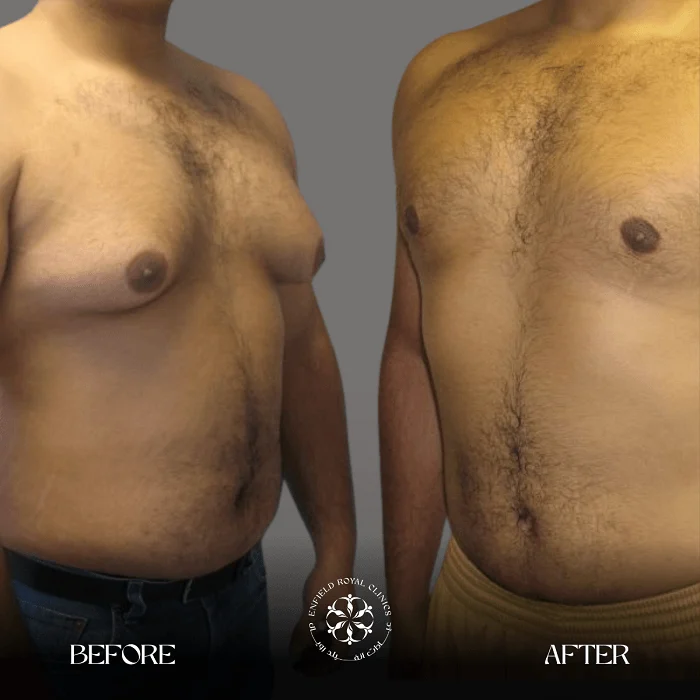
Gynecomastia Before and After Pics


Recovery Period
Phase | What to expect |
Days 1-3 | Peak swelling and bruising. Rest continuously with full-time compression. Stay in cool, air-conditioned spaces, as Riyadh heat can worsen swelling. |
Week 1 | Return to light desk work. Stitches are removed. Swelling begins to ease; keep compression on full-time. |
Weeks 2-3 | Resume light daily activities and walking. Chest shape starts emerging beneath residual swelling. |
Weeks 4-6 | Resume cardio and lower-body workouts. Switch to part-time compression. About 70% of your new contour is visible. |
Weeks 7-12 | Gradually reintroduce chest and upper-body training. Nipple sensation normalizes. Results peak at 3 months with roughly 80% of final definition. |
Months 4-6 | All residual swelling resolves. Scars mature and fade into natural skin tone. Your permanent, 100% result is now settled. |
Side Effects
- Temporary swelling and bruising
- Mild to moderate chest discomfort
- Altered nipple or skin sensation
- Visible scarring at incision sites
- Fluid accumulation (seroma)
- Minor risk of infection
- Uneven chest contour or asymmetry
Why Patients Choose Us?
At Enfield Royal Clinic, we deliver exceptional results in targeted male body sculpting by providing a calm, supportive environment backed by the latest surgical advancements. Here is why our clinic stands out.
- 15 Years of Proven Expertise
Dr. Muhannd Ahmad brings over 15 years of board-certified experience and hundreds of gynecomastia procedures.
- Vaser & J-Plasma Technology
Vaser liposuction and J-Plasma skin tightening enable precise contouring with minimal visible scarring.
- CBAHI-Accredited Facility
Your surgery takes place in a CBAHI-accredited facility with strict sterilization and patient safety protocols.
- Grade-Based Personalized Planning
Your plan is tailored to your gynecomastia grade, tissue type, and personal aesthetic goals from day one.
- Discreet Male-Focused Care
Our clinic provides judgment-free, private consultations in Arabic and English with convenient Riyadh clinic parking.
Book Your Appointment Today!
Achieve the masculine chest contour you want without relying on oversized clothing. For enlarged tissue that standard diet and exercise simply cannot resolve, gynecomastia surgery in Riyadh offers a reliable, permanent solution. Enfield Royal Clinic designs completely private consultations around your specific anatomy. Our available appointment slots remain strictly limited. Contact our team by phone or WhatsApp today to secure your visit.
FAQs.
No, true glandular tissue requires surgery. Excision and liposuction are the only proven methods to permanently achieve a flatter, more masculine chest contour.
It is generally not risky and remains physically harmless. However, any persistent chest lump needs a proper medical evaluation to rule out other conditions.
No, Ozempic only reduces overall body fat. It cannot dissolve true glandular tissue, so surgical removal remains necessary for a permanent physical resolution.
Grade four is the final stage. It involves significant tissue enlargement, excess skin, and a feminine chest contour that requires surgical correction to resolve.
No, it is not cancerous and remains completely benign. Still, a clinical exam is an essential step to distinguish it from other rare conditions.
No, adult cases rarely go away without surgery. However, adolescents experiencing natural hormonal shifts may occasionally see their condition comfortably resolve within two years.