Are sagging cheeks, soft jawlines, or early jowls making your face look less defined? You still have choices for gentle contour support. A thread lift in Riyadh can treat selected areas of mild to moderate tissue looseness, often with minimal downtime. Because temporary medical threads reposition targeted tissue, they simultaneously encourage collagen formation during healing. Therefore, at Enfield Royal Clinic, specialists evaluate your facial structure, skin condition, and expectations before planning thread placement.
Read more to explore thread types, benefits, costs, and aftercare.
Procedure Time
1 Hour
Downtime
1 - 2 Days
Back to Work
1 - 2 Weeks
Results
4 - 5 Weeks
Table of Contents
What is a Thread Lift?
A thread lift is a cosmetic procedure that uses medical threads to reposition sagging tissue layers. This procedure lifts drooping skin without traditional surgery because it relies on specialized temporary sutures. Quick office options usually support facial contours while keeping downtime very minimal. It ensures fine materials securely hold sagging skin for a refreshed and natural appearance.
What Issues Does a Thread Lift Target?
A thread lift generally targets the following structural issues:
- Dermal Laxity
- Tissue Sagging
- Collagen Depletion
- Structural Laxity
- Skin Laxity
Thread Lift Treament Cost in Riyadh
The price of a thread lift in Riyadh usually ranges from 2,500 SAR to 15,000 SAR. This cost is flexible rather than fixed for everyone. We provide an exact quote after consultation with our specialist. A breakdown of the cost according to treatment area and type of thread is given below:
Price Breakdown by Type of Threads
Thread Type | Cost Per Thread (SAR) |
PDO Thread | 400-700 |
PLLA Thread | 600-900 |
PCL Thread | 700-1,100 |
Cog Barbed Threads | 500-1,000 |
Smooth Threads | 350-600 |
Price Breakdown by Treatment Area
Area Treated | Estimated Cost (SAR) |
Forehead & Brow Lift | 4,000-6,000 |
Cheeks & Mid-Face Lift | 5,000-8,000 |
Jawline & Neck | 6,000-10,000 |
Full-Face Lift | 10,000-15,000 |
Factors Affecting Cost
- Number of threads: More inserted threads increase the total procedure price.
- Thread material type: Premium synthetic polymers cost more than standard options.
- Treatment area size: Larger targeted zones cost more than smaller areas.
- Patient skin condition: Complex tissue density requires more time, costing more than simple cases.
Types of Thread Lifts
There are different types of thread lifts available, including:
PDO Threads
PDO (Polydioxanone) threads are biodegradable and absorbable threads that stimulate collagen production and provide lifting and tightening effects on the skin. PDO threads come in different sizes and shapes, depending on the area to be treated.
Silhouette Soft Threads
Silhouette Soft Threads are made of polylactic acid (PLA) and have small cones that anchor the threads under the skin. The threads provide immediate lifting effects while stimulating collagen production for long-lasting results.
Aptos Threads
Aptos Threads are made of polypropylene and are non-absorbable threads that provide a stronger lifting effect than PDO threads. They are used for more severe skin sagging and can last up to 5 years.
Feather Lift Threads
Feather Lift Threads are made of polypropylene and have small barbs that anchor the threads under the skin. They provide an immediate lifting effect and stimulate collagen production for long-lasting results.
It is important to note that each type of thread lift has its own advantages and disadvantages, and the choice of thread will depend on the patient’s individual needs and goals. A qualified practitioner will be able to recommend the best type of thread lift for you during a consultation.
Benefits of Thread Lift
The typical improvements that are mostly offered by a thread lift are as follows:
Targeted Placement
It treats specific problem zones like loose jowls or tired cheeks with high precision.
Gradual Improvement
The method lets your appearance change softly over several months without any sudden shifts.
Lower Risks
Fewer complications occur compared to major operations because the procedure uses tiny entry points.
Customized Fit
Tailored fiber lengths match your unique facial structure for balanced and even results.
Fresh Glow
This process boosts local blood flow to give your skin a vibrant and healthy appearance.
Flexible Care
Your specialist can easily add extra support threads during later follow-up visits.
How to Get Ready for a Thread Lift?
Get ready for a thread lift treatment by following these tips to ensure the best possible outcome.
- Pause heavy retinol creams near your treatment areas.
- Skip intense gym workouts 48 hours before your visit.
- Postpone dental procedures 2 weeks before thread placement.
- Cancel blood pressure supplements if your specialist approves them.
- Stop facial steam sessions 3 days before your appointment.
Which Individuals are Best Suited for Thread Lift?
The individuals who are usually considered the right fit for this treatment are as follows:
- Adults with mild jowls sagging around the jawline.
- Individuals seeking subtle mid-face volume repositioning without surgery.
- People who want collagen stimulation for loose neck skin.
- Patients with realistic expectations about minor lifting results.
- Adults experiencing early signs of brow and cheek descent.
Thread Lift Procedure
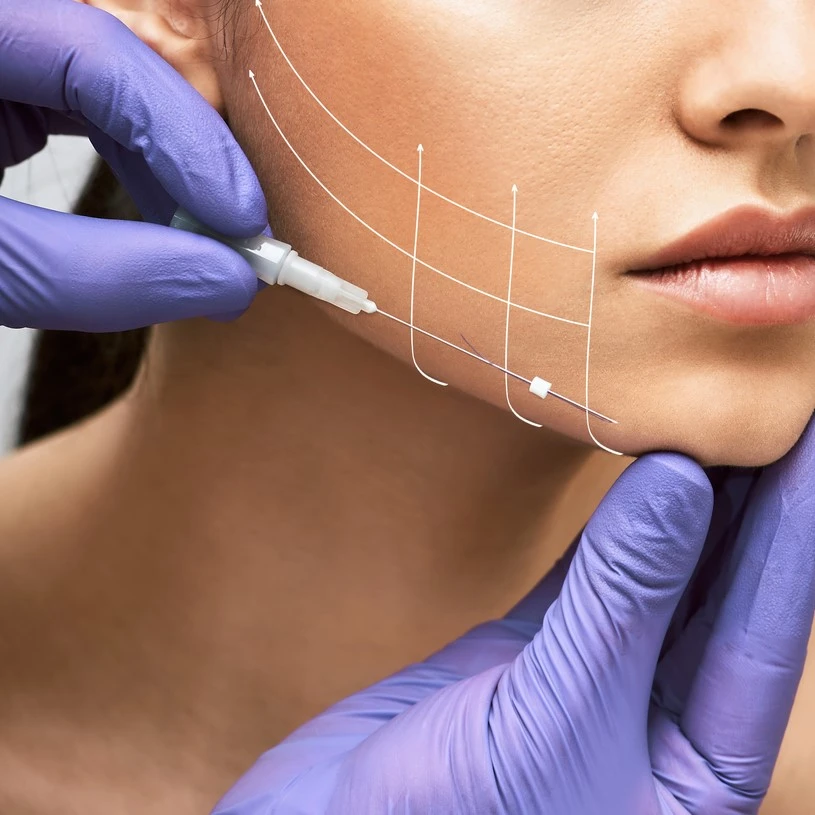
The process begins with a professional consultation and gentle pre-treatment care. This makes you completely comfortable. Here is what happens at each step:
- Ultrasound Mapping
At first, specialists scan your skin layers with ultrasound to find the right insertion pathways.
- Local Numbing
Next, numbing liquid goes into the target zones to block pain during your session. This keeps you completely comfortable while the specialist works.
- Thread Placement
Then, a tiny tube glides under the skin to place the threads. This gentle motion sets the material exactly inside the tissue layers.
- Thread Adjustment
The specialist carefully positions the threads to support the area. Then, they secure the fibers to protect your adjusted facial shape.
- Result Review
Finally, your medical team reviews the finishing angles so everything looks perfectly natural and balanced.
What are Aftercare Instructions for a Thread Lift?
Follow the tips listed below to protect your contours and ensure easy healing.
- Keep your head elevated while resting to reduce swelling.
- Sleep flat on your back to protect facial contours.
- Avoid heavy exercise until your healing phase concludes
- Skip makeup applications for the first 24 hours.
- Wash your face gently without rubbing or pulling skin.
What are the Recovery Phases After a Thread Lift?
Recovery Phase & Timeframe | What to Expect |
Immediate Aftercare (Days 1 to 3) | Mild puffiness, skin tightness, and soft bruising may show up near where the threads went in. |
Early Healing (Days 4 to 7) | That initial swelling and bruising will start settling down as tissue adjusts |
Tissue Settling (Weeks 2 to 4) | The threads blend right in with your natural tissue, and any tight, pulling feelings completely fade away. |
Full Stabilization (Months 1 to 3) | Fresh collagen builds up all around the threads, bringing out your final, clear structural lift. |
Thread Lift Before and After
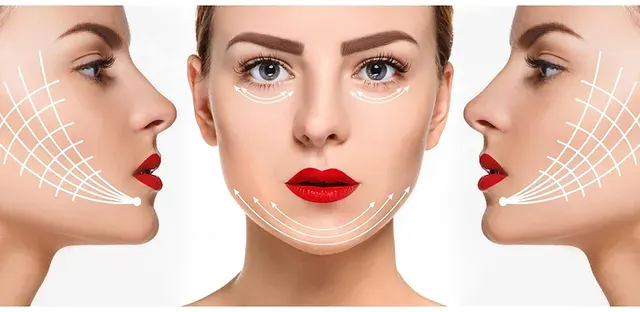
We at Enfield Royal Saudia has a history of providing best before and after results of thread lift treatment. Wanna know more? Book a FREE consultation with us today!
Risks Involved in the Procedure
Some of the possible risks associated with thread lift procedure are:
- Bruising and swelling: You may experience bruising, swelling, and mild discomfort after the procedure. These symptoms are usually temporary and subside within a few days.
- Infection: There is a risk of infection associated with any invasive procedure, and thread lift is no exception.
- Thread migration: In rare cases, the threads may move or migrate from their original position, resulting in an uneven or asymmetrical appearance.
- Nerve damage: There is a risk of nerve damage during the insertion of threads, which can cause numbness or tingling in the treatment area. This is a rare complication, but it can be permanent in some cases.
- Allergic reactions: You may be allergic to the materials used in the threads, which can cause an allergic reaction or skin irritation.
- Unsatisfactory results: In some cases, the results of thread lift may not meet your expectations. This may occur if you have unrealistic expectations or if the procedure is not performed correctly.
It is important for you to discuss the potential risks and complications of thread lift procedure with their practitioner.
Why does Enfield Royal Clinic Stand Out?
Expert Medical Specialists
Every procedure is performed by our board-certified dermatologists who bring years of specialized training to your care.
Advanced Technology
We apply targeted ultrasound guidance alongside biocompatible threads to address deep tissue layers with complete precision.
Personalized Treatment Plan
Our professionals create every plan around your unique bone structure, skin thickness, and personal anti-aging targets.
Strict Safety Standards
We uphold strict cleanliness rules and utilize approved clinical supplies to protect your well-being throughout the process.
Relaxing Treatment Space
Our practice delivers a peaceful and reassuring setting tailored to keep you entirely at ease during your healing period.
Redefine Your Natural Beauty-book us Now!
Overcome facial sagging with a thread lift in Riyadh. This technique lifts drooping contours and naturally restarts collagen production deep underneath. At Enfield Royal Clinic, our specialists use the barbed vector suspension technique to deliver immediate lifting and natural rejuvenation. Secure your appointment today before slots fill up completely. Contact our team via call, WhatsApp, email, or by filling out the form to reserve your spot.
FAQs.
A thread lift typically lasts around 1 to 3 years, depending completely on how well your body heals. Your skin will keep aging naturally underneath the threads over time.
It depends entirely on your personal aesthetic goals. Threads physically lift sagging skin, while Botox simply relaxes facial muscles. These two treatments address different concerns.
The best age for a thread lift is typically your late 30s to 50s. People in this age group usually notice mild sagging without severe skin looseness.
The risks of a thread lift include minor bruising, slight puckering, or temporary soreness. Skilled practitioners help keep these common issues to a strict minimum. Most minor side effects resolve naturally within just a few days.
You can repeat a thread lift once your previous threads completely dissolve inside your skin. Doctors usually suggest waiting until your first results fade before doing another.
No, you should avoid facial massages for several weeks after your procedure. Massaging too early can move the threads out of place and disrupt your healing. Proper aftercare ensures your newly lifted contours settle securely.